Water and drainage
AC Water Leak Repair in Gainesville, FL
An air conditioner pulls gallons of moisture out of Florida air every day. That water is supposed to leave through a drain line. When it does not, it finds drywall, insulation and flooring instead.
Water around an indoor unit is worth acting on quickly — the repair is usually modest, while the damage from ignoring it is not.
24/7 availability for urgent cooling problems in Gainesville and nearby areas.
Where the water is coming from
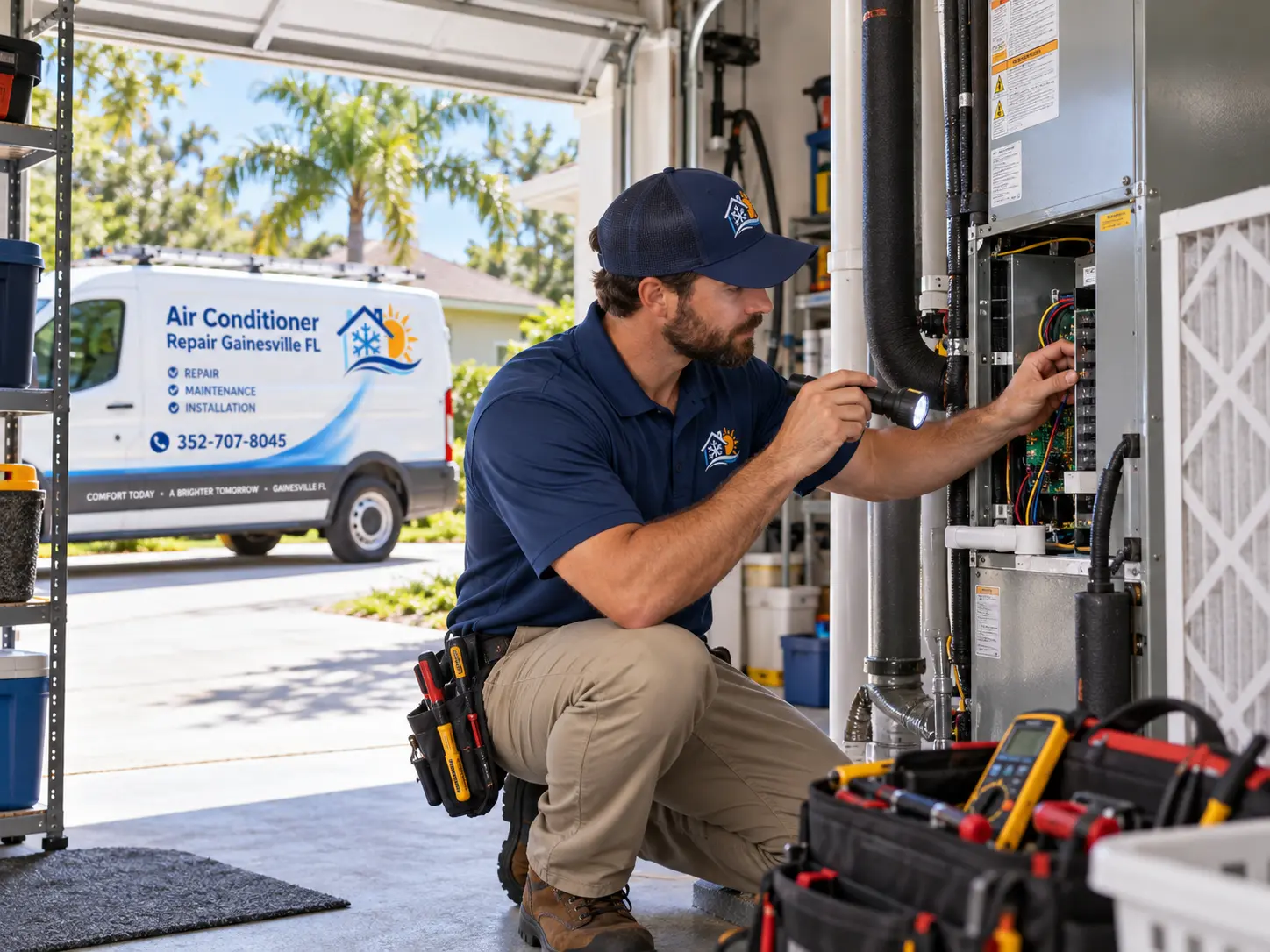
Warm indoor air passing over the cold evaporator coil condenses moisture, which drips into a pan and drains away by gravity or by a condensate pump. Any blockage, slope problem or pan failure sends that water somewhere else.
Clogged drain line
Failed condensate pump
Rusted or cracked drain pan
Frozen coil thawing
Disconnected or sloped-wrong line
Missing or dry trap
Safe steps while you wait
- Turn the cooling off at the thermostat to stop making more condensate.
- Place towels or a shallow pan to protect flooring and catch drips.
- If a wet-dry vacuum is available, clear standing water from the secondary pan.
- Look for a ceiling stain below an attic air handler and take a photo.
- Check whether the drain outlet outside the house is dripping while the system runs.
- Leave the float switch alone if it has shut the system off — it is preventing damage.
Do not bypass or jumper a float safety switch to keep cooling running. That switch is the only thing standing between a clogged drain and a ruined ceiling.
What repair involves
- Clearing the drain line with vacuum or nitrogen and flushing the trap.
- Verifying continuous slope and correcting sagging or reversed sections.
- Testing or replacing the condensate pump and its float.
- Repairing or replacing a rusted primary pan, or adding a treated secondary pan.
- Confirming float switch operation after the line is clear.
- Checking coil cleanliness, since dirty coils shed debris that re-clogs drains.
Why drain problems are so common here
High humidity means high condensate volume for many months of the year, and warm, damp drain lines are ideal for biological growth. Systems that run nearly continuously simply produce more water to move.
Attic installations raise the stakes. A drain clog above a bedroom ceiling shows up as a stain or a collapsed drywall patch, which is why routine drain maintenance pays for itself in this climate.
Frequently Asked Questions
- Why is water leaking from my indoor AC unit?
- Almost always because condensate cannot leave through the drain. A clogged line, failed pump, rusted pan or thawing coil are the usual causes. Refrigerant leaks do not produce puddles — refrigerant is a gas at room conditions.
- Can I pour bleach down the drain line?
- Household bleach can damage some components and metal pans. A diluted vinegar flush is gentler for routine upkeep, but an actual clog needs to be pulled from the line rather than dissolved.
- My AC shut itself off and there is water in the pan. Is that a malfunction?
- That is the float switch doing its job. The system will stay off until the drain is cleared and the water level drops.
- How often should the drain be serviced?
- In this climate, checking and flushing the condensate drain at least once a year — ideally before the heaviest cooling season — prevents most overflow calls.
Related pages
Prefer to talk it through? Call 352-707-8045 or send a service request.
AC Trouble in Gainesville?
Describe the symptoms and get help scheduling air conditioner repair. Service requests are available 24/7.