Outdoor unit
AC Condenser Repair in Gainesville, FL
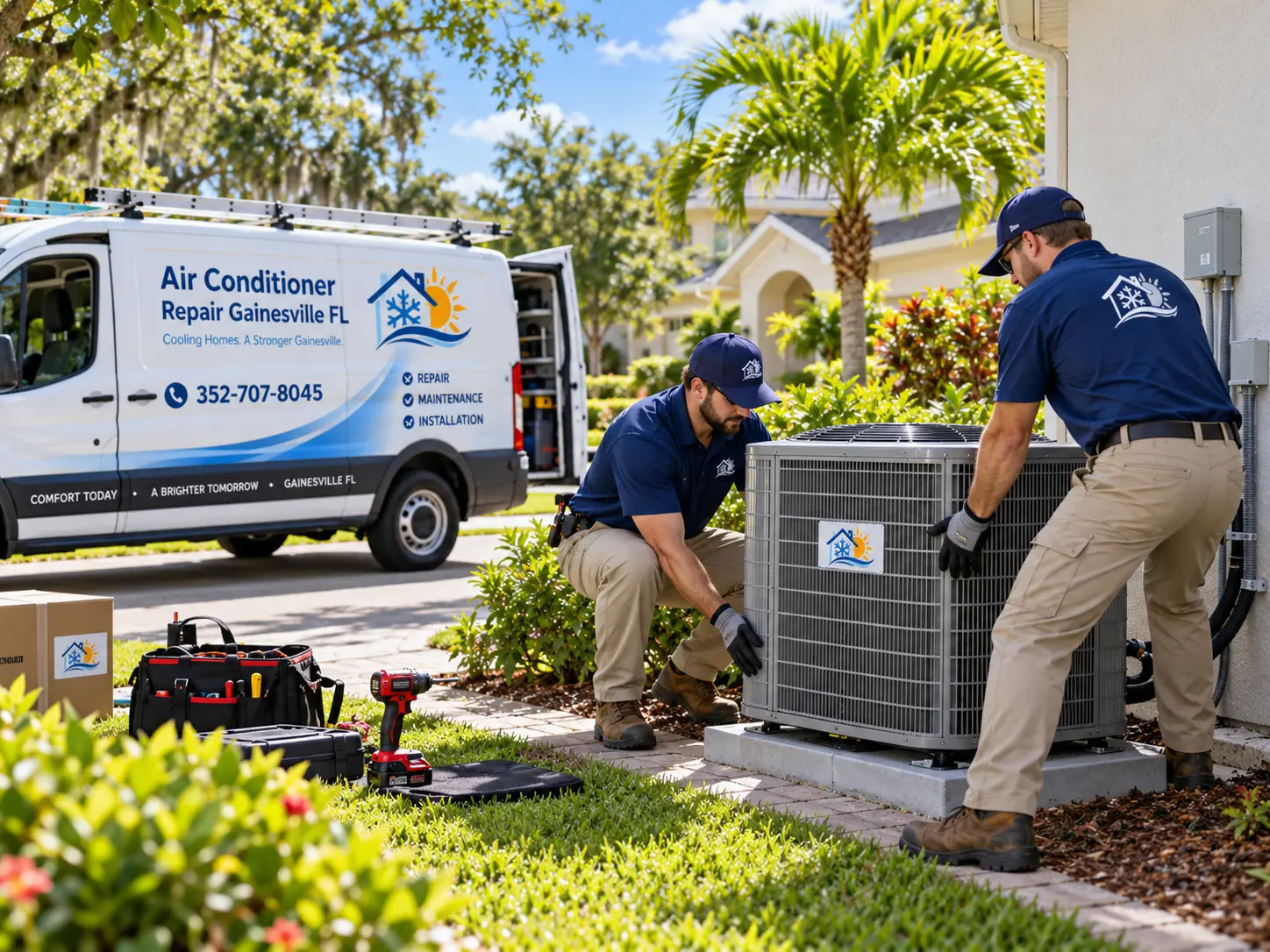
The outdoor condenser rejects the heat your home's air conditioner collects indoors. It also lives outside in Florida weather, so its components are exposed to heat, moisture and debris.
Most condenser faults fall into three groups: electrical components, the fan and motor, or a coil that can no longer shed heat.
24/7 availability for urgent cooling problems in Gainesville and nearby areas.
What goes wrong outside
Condenser fan motor
Run capacitor
Contactor
Dirty coil
Physical and storm damage
Disconnect and wiring
What you can safely observe
- Whether the fan spins freely and quietly when running.
- Whether the top of the unit blows noticeably warm air out.
- Whether the coil fins are visibly packed with debris or vegetation.
- Whether shrubs, fences or a deck sit closer than about two feet.
- Whether the unit sits level on its pad and the lines are not rubbing.
- Whether you hear a hum without the fan turning.
Keep hands and tools out of the unit. Do not remove the electrical panel, spin the fan with power on, or pressure-wash the coil — high pressure bends fins and drives debris deeper.
Condenser service and repair steps
- Measure voltage, amp draw and capacitor values on the fan and compressor circuits.
- Inspect the contactor and replace pitted or heat-damaged components.
- Rinse the coil from the inside out with low pressure to clear embedded debris.
- Check fan blade condition, motor bearings and correct rotation.
- Verify refrigerant pressures once heat rejection is restored.
- Confirm clearances, level pad support and secure line-set insulation.
Outdoor exposure in Alachua County
Heavy spring pollen, frequent mowing and afternoon storms give condensers here a hard life. Coils gather a felt-like mat that is easy to miss from a few feet away and costs real capacity when temperatures peak.
After a storm, look for debris packed against the coil, a shifted pad or standing water around the base. Those are worth reporting when you request service so the visit starts in the right place.
Frequently Asked Questions
- How often should the outdoor coil be cleaned?
- At least once a year in this climate, and more often if the unit sits near heavy landscaping or a frequently mowed lawn. Clean coils lower pressures, amp draw and run time.
- The fan runs but the air on top is not hot. Is that bad?
- It can indicate the compressor is not running or not pumping. A working system moves noticeably warm air out of the top of the unit.
- Can I cover my condenser in winter?
- A full wrap traps moisture and invites corrosion and pests. A top-only cover to keep leaves out is safer, and it must be removed before cooling season.
- Is it a problem that my unit is loud?
- New noises matter more than absolute volume. A rising hum, rattle or vibration often signals a failing fan motor, loose panel or a compressor mounting issue worth evaluating.
Related pages
Prefer to talk it through? Call 352-707-8045 or send a service request.
AC Trouble in Gainesville?
Describe the symptoms and get help scheduling air conditioner repair. Service requests are available 24/7.